![Alprolix® [Coagulation Factor IX (Recombinant), Fc Fusion Protein] logo](/dam/jcr:1b4ca645-c502-4d05-8448-b6ce08e92fbd/Alprolix_logo.2025-04-17-09-13-18.svg)
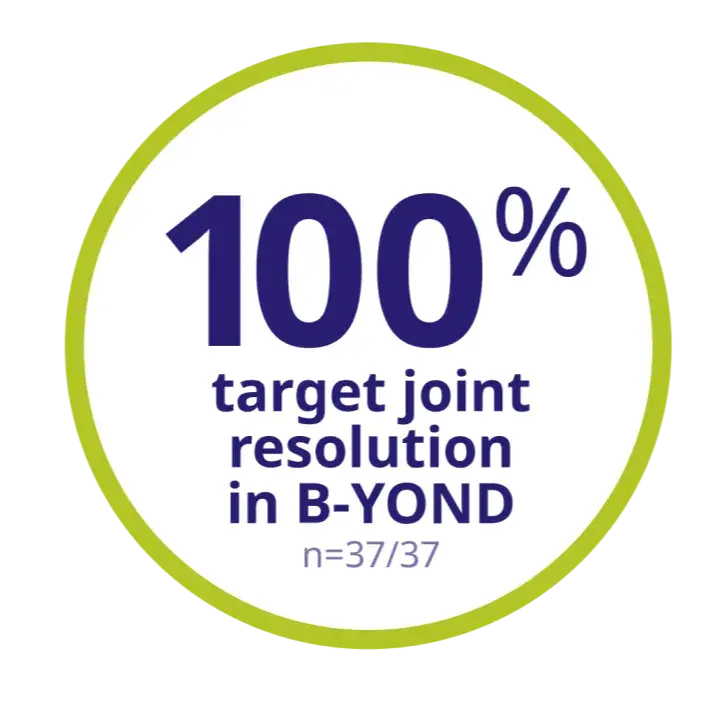
- A target joint was defined as a major joint with ≥3 bleeding episodes over 3 consecutive months
- Target joint resolution was defined as ≤2 spontaneous joint bleeds within 12 months

ALPROLIX® prophylaxis for adults and teens
Trusted prophy protection* for patients ≥12 years old
Previously treated patients (PTPs) ≥12 years
1.4
Median overall bleeds per year
(B-LONG trial)†
(on individualized prophylaxis)
0.9
Median spontaneous bleeds per year
(B-LONG trial)†
(on individualized prophylaxis)
0.4
Median joint bleeds per year
(B-LONG trial)†
(on individualized prophylaxis)
B-LONG was a phase 3 study that investigated the safety and efficacy of ALPROLIX in 123 previously treated adults and adolescents 12 and older with severe hemophilia B. The study included a fixed-interval (weekly) arm (n=63), a fixed-dose (interval-adjusted) arm (n=29), an episodic (on-demand) arm (n=27), and a surgical arm (n=12).
42% of people in B-LONG had 0 bleeds on ALPROLIX‡
*ALPROLIX has been proven to help prevent bleeding episodes in people using prophylaxis.
†Interval-adjusted prophylaxis arm for B-LONG.
‡11 out of the 26 people in the B-LONG trial using individualized prophy had an overall bleed rate of 0.
Prophy=prophylaxis.
What do these terms mean?
Overall bleeds
This measures bleeds of any kind over an entire year—ones that appear at random, or ones from an accident (banging your elbow, etc)
Spontaneous bleeds
This is the number of unexpected bleeds that occur each year without a known cause or injury
Joint bleeds
This measures the number of bleeds where blood fills in the space around your joints (like elbows, knees, or fingers)
What is a median?
ALPROLIX bleed data are calculated using the median. That means it's the middle number in a group, when listed from smallest to biggest. It shows what’s typical, without being changed by really high or low numbers
What is a median?
ALPROLIX bleed data are calculated using the median. That means it's the middle number in a group, when listed from smallest to biggest. It shows what’s typical, without being changed by really high or low numbers.
5 years after B-LONG, results are still consistent
PTPs ≥12 years
1
Median overall bleeds per year
(B-YOND Trial, Year 5)§
(on individualized prophylaxis)
0
Median spontaneous bleeds per year
(B-YOND Trial, Year 5)§
(on individualized prophylaxis)
1
Median joint bleeds per year
(B-YOND Trial, Year 5)§
(on individualized prophylaxis)
B-LONG was a phase 3 study that investigated the safety and efficacy of ALPROLIX in 123 previously treated adults and adolescents 12 and older with severe hemophilia B. The study included a fixed-interval (weekly) arm (n=63), a fixed-dose (interval-adjusted) arm (n=29), an episodic (on-demand) arm (n=27), and a surgical arm (n=12).
ALPROLIX was studied for up to 6.5 years in adults and teens, from the start of the B-LONG trial to the end of the B-YOND trial
Kids B-LONG was a phase 3 study that investigated the safety and efficacy of ALPROLIX in 30 previously treated children with severe to moderately severe hemophilia B. 15 children were 1 to 5 years of age; 15 children were 6 to 11 years of age. All children were treated with individualized prophylaxis.
B-YOND was an open-label extension trial that studied the long-term safety and efficacy of ALPROLIX over 5 years in 120 adults, adolescents, and kids previously treated in Kids B-LONG or B-LONG. The study included a fixed-interval arm (n=74), a fixed-dose arm (n=36), a modified prophylaxis arm (n=17), and an on-demand arm (n=15).
§In a 5-year subanalysis of the interval-adjusted prophylaxis arm of B-YOND, 17 patients ≥12 years achieved a median ABR of 1 (0-2.0) for Year 5, and a median AsBR of 0 (0-1.0) for Year 5.
ABR=annualized bleed rate; AsBR=annualized spontaneous bleed rate.

ALPROLIX Dosing
ALPROLIX prophy offers flexible dosing options to keep pace with your lifestyle.

Patient stories
See how real ALPROLIX patients
manage hemophilia B.
Important Safety Information and Indication
INDICATION
IMPORTANT SAFETY INFORMATION
INDICATION
ALPROLIX® [Coagulation Factor IX (Recombinant), Fc Fusion Protein] is an injectable medicine that is used to help control and prevent bleeding in people with hemophilia B. Hemophilia B is also called congenital Factor IX deficiency. Your healthcare provider may give you ALPROLIX when you have surgery.
IMPORTANT SAFETY INFORMATION
Do not use ALPROLIX if you are allergic to ALPROLIX or any of the other ingredients in ALPROLIX.
Tell your healthcare provider if you have or have had any medical problems, take any medicines, including prescription and non-prescription medicines, supplements, or herbal medicines, have any allergies and all your medical conditions, including if you are pregnant or planning to become pregnant, are breastfeeding, or have been told you have inhibitors (antibodies) to Factor IX.
Common side effects of ALPROLIX include headache, abnormal sensation in the mouth, and pain in your side with blood in your urine, which may be a sign of clot formation in the urinary collecting system.
Allergic reactions may occur with ALPROLIX. Call your healthcare provider or get emergency treatment right away if you have any of the following symptoms: hives, chest tightness, wheezing, difficulty breathing, or swelling of the face.
Redness to the skin at the injection site may also occur.
ALPROLIX may increase the risk of formation of abnormal blood clots in your body, especially if you have risk factors for developing blood clots. Call your healthcare provider or seek emergency care if you have symptoms of a possible abnormal blood clot, which may include: chest pain, difficulty breathing, unexpected swelling of an arm or leg with or without pain or tenderness.
Your body can also make antibodies called "inhibitors" against ALPROLIX, which may stop ALPROLIX from working properly.
These are not all of the possible side effects of ALPROLIX. Talk to your healthcare provider right away about any side effect that bothers you or does not go away, or if bleeding is not controlled using ALPROLIX.
Tell your healthcare provider if you have or have had any medical problems, take any medicines, including prescription and non-prescription medicines, supplements, or herbal medicines, have any allergies and all your medical conditions, including if you are pregnant or planning to become pregnant, are breastfeeding, or have been told you have inhibitors (antibodies) to Factor IX.
Common side effects of ALPROLIX include headache, abnormal sensation in the mouth, and pain in your side with blood in your urine, which may be a sign of clot formation in the urinary collecting system.
Allergic reactions may occur with ALPROLIX. Call your healthcare provider or get emergency treatment right away if you have any of the following symptoms: hives, chest tightness, wheezing, difficulty breathing, or swelling of the face.
Redness to the skin at the injection site may also occur.
ALPROLIX may increase the risk of formation of abnormal blood clots in your body, especially if you have risk factors for developing blood clots. Call your healthcare provider or seek emergency care if you have symptoms of a possible abnormal blood clot, which may include: chest pain, difficulty breathing, unexpected swelling of an arm or leg with or without pain or tenderness.
Your body can also make antibodies called "inhibitors" against ALPROLIX, which may stop ALPROLIX from working properly.
These are not all of the possible side effects of ALPROLIX. Talk to your healthcare provider right away about any side effect that bothers you or does not go away, or if bleeding is not controlled using ALPROLIX.
Please see full Prescribing InformationLearn more about Sanofi’s commitment to fighting counterfeit drugs
![Alprolix® [Coagulation Factor IX (Recombinant), Fc Fusion Protein] logo](/dam/jcr:fd05fa76-f9b4-440e-84c4-fd5d9bd1f016/alprolix-inverse.2025-09-25-17-20-15.svg)